


Wallet Security Is Not Just About Signing: How Transaction Simulation Changes DeFi Risk
What if the most dangerous wallet mistake happens before you approve a transaction? In decentralized finance, the familiar advice to “check the details before signing” is sound, but incomplete. A transaction can display a reasonable-looking destination while encoding a more consequential action inside a smart contract call. The central security problem is therefore not only whether a wallet protects a private key. It is whether the user can understand what that key is authorizing.
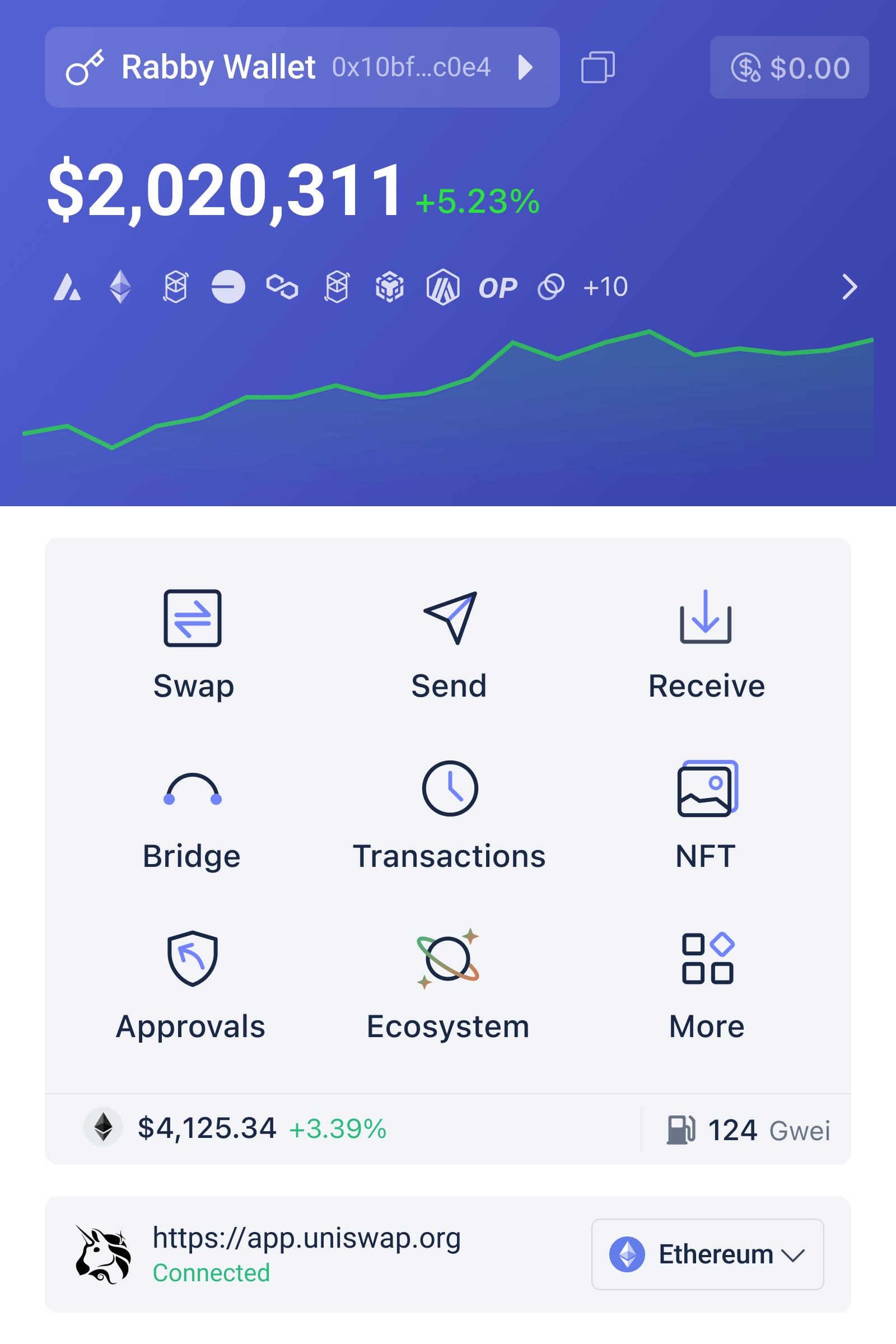
Rabby Wallet approaches this problem through transaction simulation: an attempt to show the likely result of an action before it is submitted to the blockchain. That does not make a wallet invulnerable, and it does not replace judgment. It does, however, change the workflow from blind approval toward outcome-based review. For US-based DeFi users who regularly interact with decentralized exchanges, lending protocols, bridges, and NFT contracts, that distinction is practical rather than cosmetic.
The security gap between a transaction and its consequence
A blockchain transaction is often described as a transfer, but that description is misleading for most DeFi activity. When a user swaps tokens, deposits collateral, mints an asset, or claims rewards, the wallet may be submitting data to a smart contract. The visible transaction includes a contract address and encoded instructions. The meaningful consequence may be a token approval, a change in borrowing position, or the movement of several assets through a sequence of contract calls.
This creates an important distinction: transaction data is not the same as transaction meaning. A wallet can display technical fields such as an address, network, gas estimate, and function name, yet the user may still be unable to answer the question that matters most: “What will my wallet and my positions look like if I approve this?” Security improves when the interface translates low-level instructions into likely state changes.
Simulation works by evaluating a proposed transaction against a current or near-current blockchain state without broadcasting it as a final action. The result can indicate whether the call is likely to succeed, which assets may leave the wallet, which assets may arrive, and whether an approval or other permission is being created. In a Rabby-style review flow, this information can help a user notice an unexpected token movement or an interaction with a contract they did not intend to use.
The mechanism is useful because many attacks exploit attention rather than cryptography. A malicious website may present a familiar-looking “connect” or “claim” action while asking for a broad token allowance. A compromised or deceptive contract may use a plausible interface but produce an unfamiliar result. If the simulation indicates that a valuable asset will be transferred, or that an unusually broad permission is being granted, the user has a concrete reason to stop before signing.
Three approaches to wallet transaction safety
Basic wallet confirmation: simple, familiar, and limited
The first approach is the conventional wallet confirmation screen. It typically asks the user to approve a transaction and may show the recipient, network, gas cost, and raw or partially decoded contract information. This model has an advantage: it is relatively lightweight and widely understood. It also keeps the wallet from making too much interpretive judgment on the user’s behalf.
Its weakness is the gap between technical visibility and practical comprehension. Contract addresses are difficult to verify by memory. Function names can be unfamiliar. A user may know that a transaction is “for a swap” because the website says so, without recognizing that the wallet is also being asked to approve spending authority. This approach is therefore best suited to users who independently inspect contract addresses, allowances, calldata, and protocol documentation—or to very simple transfers where the intended outcome is obvious.
Transaction simulation: better outcome awareness
The second approach is simulation-enhanced review. Instead of presenting only what the transaction contains, the wallet attempts to estimate what it will do. This is a more useful mental model for ordinary DeFi decisions because users generally care about effects: assets sent, assets received, permissions changed, and whether the call is likely to revert.
For someone preparing to download and install the rabby extension download, the important point is not that simulation removes risk. Its value lies in making a hidden layer of risk more legible. A user can compare the expected outcome with the action they intended to take. If a routine swap appears to involve an unrelated token, an unfamiliar contract, or a permission that persists beyond the immediate trade, the discrepancy becomes a decision signal.
Simulation also helps with a less dramatic but common problem: failed transactions. A call that is likely to revert can still consume network fees when broadcast. A pre-transaction warning may prevent the user from paying for an action that cannot succeed under current conditions. In volatile DeFi markets, that matters because balances, liquidity, prices, and contract state can change between review and execution.
Hardware wallets: stronger key isolation, different human risks
The third approach is a hardware wallet. A hardware device is designed to keep the private key isolated from the computer or browser, reducing the impact of certain malware and key-extraction attacks. This is a major security advantage, particularly for larger balances or long-term holdings. But hardware protection answers a different question from simulation.
A hardware wallet may protect the key while still leaving the user to approve a harmful contract interaction. If the user confirms an unlimited allowance or signs an unintended message, physical key isolation does not necessarily make the authorization safe. Some hardware devices can show transaction details, but screen size, contract complexity, and compatibility may limit how much context is available. The trade-off is clear: hardware wallets strengthen authorization security, while simulation strengthens interpretation of the proposed action. For significant funds, using both layers can be more sensible than treating them as substitutes.
Where simulation helps—and where it breaks
The most important limitation is that a simulation is an estimate based on a particular state. Smart contracts can behave differently when the transaction is actually mined. Token prices may move, liquidity may change, block conditions may differ, and another transaction may alter the relevant state first. A simulation can therefore be accurate about the likely result without being a guarantee of the final result.
Some protocols also contain dynamic or adversarial behavior. A contract may depend on block timing, external data, permissions, or interactions that are difficult to reproduce perfectly in a preview environment. Cross-chain activity introduces another boundary: the first transaction may trigger later actions on another network, and the simulation of one step may not fully communicate every downstream consequence.
There is also a semantic limitation. A wallet can identify that tokens will move, but it may not know whether the economic trade is favorable. It can show that collateral is being deposited without deciding whether the borrow rate is sensible, whether liquidation risk is acceptable, or whether a protocol’s governance is trustworthy. Simulation is strongest at answering “what is this transaction likely to do?” It is weaker at answering “should I want that outcome?”
Warnings have their own trade-off. Too few warnings create false confidence; too many create alert fatigue. If users repeatedly encounter generic risk messages for ordinary interactions, they may learn to dismiss them. Effective security design must distinguish between an unexpected asset movement, a broad allowance, a suspicious contract, and a merely unfamiliar but legitimate interaction. A warning is most valuable when it explains the specific mismatch or hazard rather than simply displaying a color or severity label.
A practical framework for reviewing a DeFi transaction
Before approving an action, begin with the intended outcome in plain language. For example: “I want to exchange a defined amount of one token for another on this network.” Then compare that intention with the wallet’s simulation. The review should focus on four questions: Which assets leave? Which assets arrive? What permissions are created? What happens if the transaction fails or the market moves?
Next, separate one-time execution from continuing authority. A token approval can allow a contract to spend tokens later, depending on the allowance and the contract’s design. The immediate transaction may appear harmless because no asset leaves at that moment, while the permission creates future exposure. Users should be especially cautious when the proposed allowance is much larger than the amount they intend to use.
Network identity deserves equal attention. A transaction can be legitimate on one chain and inappropriate on another. US users moving between Ethereum, layer-2 networks, and other supported chains should verify the selected network, asset representation, and destination. A familiar token symbol does not by itself prove that the asset is the intended version or that the destination can safely receive it.
Finally, treat unexpected results as a stop signal, not an inconvenience. If the simulation cannot complete, displays a result that conflicts with the website’s description, or identifies a contract interaction you cannot explain, postponing the transaction is rational. DeFi is designed for permissionless access, which means the user—not a bank or platform support desk—often bears the cost of an incorrect approval.
What to watch as wallet security develops
The likely direction of wallet design is toward richer intent-based review: interfaces that describe a user’s goal, compare it with the encoded transaction, and identify deviations. If these systems become more reliable, users may spend less time reading raw calldata and more time investigating meaningful exceptions. The condition is that the underlying decoding and simulation remain transparent enough to audit and do not encourage users to outsource all judgment to a warning engine.
A useful future test is not whether a wallet produces more alerts, but whether it reduces the distance between what a user thinks they are doing and what the blockchain will record. That distance can never be eliminated entirely. Smart contracts remain complex, state changes remain time-sensitive, and social engineering can manipulate the surrounding website even when the wallet behaves correctly.
Frequently asked questions
Does transaction simulation guarantee that a DeFi transaction is safe?
No. It provides an estimate of the likely execution and can reveal unexpected effects, but it cannot guarantee contract honesty, economic quality, future state, or the safety of every downstream action. Users should still verify the protocol, network, asset, allowance, and intended outcome.
Is a simulated wallet transaction safer than using a hardware wallet?
They address different risks. Simulation helps users understand what a transaction is likely to do, while a hardware wallet helps isolate private keys from an infected computer or browser. For substantial holdings, combining clear transaction review with strong key protection can provide broader coverage than relying on either approach alone.
What should I do when a simulation fails or shows an unfamiliar result?
Pause rather than approving automatically. Recheck the website, contract, network, requested allowance, and expected asset movements. A failed simulation may reflect a temporary state issue, but it may also indicate that the transaction is invalid or materially different from what you intended.
Wallet security is often framed as a question of where a private key is stored. That remains fundamental, but DeFi adds another layer: whether the owner can accurately interpret the authority being exercised. Rabby’s transaction-simulation model is valuable precisely because it moves review closer to consequences. Its proper role is not to replace hardware protection, protocol research, or user judgment. It is to make the moment before signing more informative—and to give users a better chance to notice when a transaction is not the one they meant to make.